
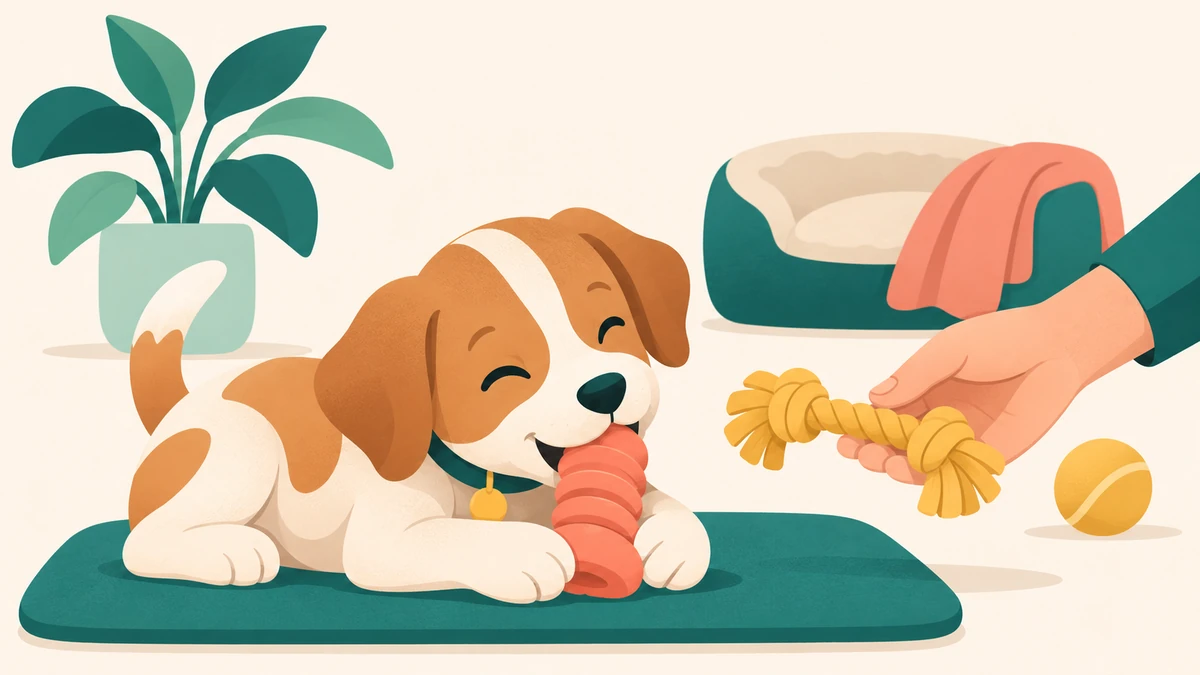
To stop a puppy from biting, redirect their mouth to a toy every time they nip, and end play for a moment when teeth touch skin. Make sure they get enough chew toys, exercise, and naps, since overtired puppies bite more. Stay calm and consistent, and never hit or yell. Most puppies grow out of heavy mouthing with steady training.
Quick Summary
- Puppy mouthing is often normal play, but stiff posture, guarding, or hard bites need attention.
- Always have a toy ready to redirect.
- Pause play briefly when teeth touch skin.
- Give plenty of safe things to chew, especially while teething.
- Puppies need a lot of sleep. Tired puppies bite more.
- Avoid rough games that encourage biting hands.
Why Puppies Bite
Puppies explore the world with their mouths. They also play by mouthing their littermates. Biting is how they learn how hard is too hard. On top of that, puppies teethe, and chewing relieves the discomfort. Biting is usually play, not aggression, but it still needs to be shaped into good manners.
Step 1: Always Have a Toy Ready
Keep chew toys in every room and in your pocket. When your puppy starts mouthing your hand, calmly offer a toy instead. Praise them when they bite the toy. You are teaching “bite this, not me.” Rope toys, rubber chew toys, and tug toys work well.
Step 2: Teach That Teeth on Skin Ends the Fun
When your puppy’s teeth touch your skin during play:
- Calmly say a marker word like “oops” or “ouch.”
- Slowly remove your hands and stop playing for 10 to 20 seconds. Turn away or stand up.
- Resume play calmly, with a toy.
If the biting continues, briefly step behind a gate, leaving the puppy in a safe, puppy-proofed area. The lesson: biting people makes the fun stop. Consistency from everyone in the house is key.
Step 3: Avoid Games That Encourage Biting
Wrestling, letting the puppy chew on your fingers, and waving hands in front of their face teach them that hands are toys. Use tug toys or fetch instead. Tug is fine as long as you pause the game whenever teeth touch skin.
Step 4: Meet Their Chewing Needs
Teething puppies need to chew. Offer:
- Rubber toys that can be stuffed with a little food and frozen
- Puppy-safe chew toys sized for your dog
- A damp washcloth frozen into a twist (supervise)
Rotate toys every few days to keep them interesting. Ask your vet which chews are safe for your puppy’s age and size.
Step 5: Make Sure Your Puppy Gets Enough Sleep
Young puppies need a lot of sleep, much more than many owners expect. An overtired puppy acts like a cranky toddler: wild, bitey, and hard to calm. If your puppy gets the “zoomies” and starts biting everything, it may be nap time. A crate or quiet pen with a chew toy can help them settle.
Step 6: Give Mental and Physical Exercise
Boredom leads to biting. Short training sessions, sniffing games, puzzle feeders, and age-appropriate walks tire out a puppy’s brain and body. Even five minutes of practicing “sit” and “down” with treats helps.
Step 7: Teach a Calm Alternative
Reward calm behavior. When your puppy lies down near you or chews a toy quietly, give gentle praise or a treat. Puppies repeat what gets rewarded.
Step 8: Teach Kids the Rules
Running, squealing, and waving hands can excite a puppy. Adults should supervise and step in before play becomes rough. Teach kids to:
- Stand still like a tree if the puppy nips.
- Play only with toys, never hands.
- Leave a sleeping or eating puppy alone.
Always supervise puppies and young children together.
What Not to Do
- Do not hit, flick the nose, or hold the mouth shut. It can make puppies fearful or more bitey.
- Do not yell. Loud reactions can excite puppies more.
- Do not jerk your hand away fast. It looks like a game. Calmly remove it instead.
When to Get Help
Talk to your vet or a qualified, positive-reinforcement trainer if your puppy:
- Growls, freezes, or snaps when touched, handled, or near food
- Bites hard enough to break skin regularly
- Shows no improvement after several weeks of consistent training
Working on house training too? See our guide on how to make your dog poop outside. And as your puppy grows, regular nail care matters: here is how to trim dog nails at home.
FAQ
At what age do puppies stop biting?
Many puppies mouth less once their adult teeth come in, often around 6 to 7 months, especially with consistent training.
Is puppy biting a sign of aggression?
Usually not. Most puppy biting is play and teething. Growling or snapping around food or handling is worth discussing with a professional.
Should I yelp when my puppy bites?
A calm “oops” and a pause in play works for many puppies. A high-pitched yelp excites some puppies more.
Why does my puppy bite more at night?
Overtiredness is a common reason. Try an earlier, calm wind-down and a nap in a quiet spot.
Leave a Reply