
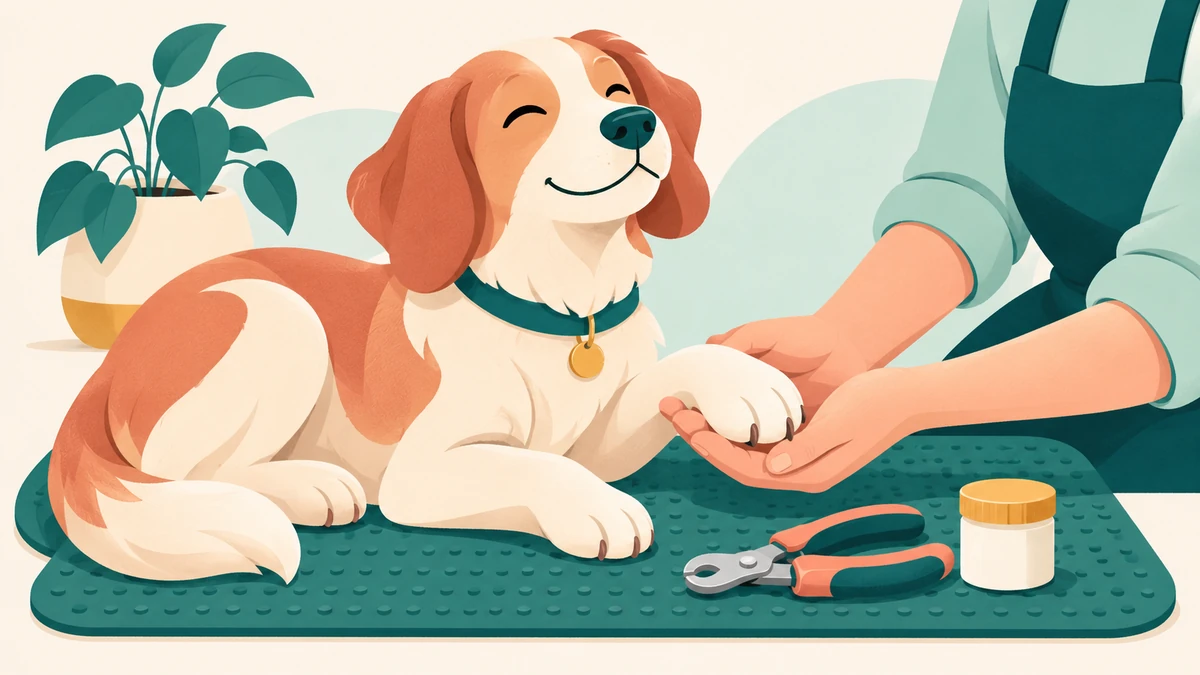
To trim your dog’s nails at home, use sharp dog nail clippers or a grinder, take off small pieces at a time, and stop before you reach the quick, the pink area with blood vessels inside the nail. Go slowly, reward your dog with treats throughout, and keep styptic powder nearby in case of a nick. At first, trim only one or two nails per session while your dog gets used to it.
Quick Summary
- Get sharp clippers or a nail grinder and styptic powder.
- Help your dog get comfortable with paw handling first.
- Trim tiny slivers and stop before the quick.
- Reward with treats after every nail or two.
- Trim regularly so nails stay short.
How to Tell if Nails Are Too Long
A common sign is hearing your dog’s nails click on hard floors. When your dog stands, nails touching the ground can push the toes at awkward angles. Long nails can be uncomfortable and affect how your dog walks. How often to trim depends on your dog and how much they walk on rough surfaces.
What You Need
- Clippers: scissor-style or guillotine-style, sized for your dog
- Or a nail grinder: files the nail down gradually and gives smooth edges
- Styptic powder: stops bleeding if you cut the quick (cornstarch works in a pinch)
- Small, tasty treats
- Good lighting
- A helper, if your dog is wiggly
Understanding the Quick
Inside each nail is the quick, which contains blood vessels and nerves. Cutting it hurts and bleeds.
- Light-colored nails: you can usually see the pink quick through the nail. Stay a few millimeters away from it.
- Dark nails: the quick is hard to see. Take only a tiny amount from the tip, and ask a vet or groomer to show you where to stop. Do not rely on color alone.
If nails have been long for a while, the quick grows longer too. Regular small trims help it shrink back over time.
Step 1: Build Comfort First
Many dogs dislike nail trims because they are not used to having their paws handled. Over several days:
- Touch your dog’s paw briefly, then give a treat.
- Hold the paw a little longer, then treat.
- Gently press on a toe to extend the nail, then treat.
- Show the clippers or turn on the grinder nearby, then treat.
- Touch the clippers to a nail without cutting, then treat.
Go at your dog’s pace. Repeat only as long as your dog stays comfortable.
Step 2: Get Into Position
Pick a quiet time when your dog is relaxed, like after a walk. Small dogs can sit in your lap. Larger dogs can lie on their side or sit next to you. Make sure you can see the nail clearly.
Step 3: Trim Small Pieces
- Hold the paw gently but firmly.
- Press lightly on the toe pad to extend the nail.
- Cut a small sliver from the tip at a slight angle, following the curve of the nail.
- Check after each tiny cut. Stop well before the visible quick; if you cannot judge its position, stop and ask a professional.
- Give a treat and praise.
Do not forget the dewclaws, the nails higher on the inside of the leg, if your dog has them. They do not touch the ground and can grow long.
Using a Grinder Instead
Grinders take longer but make it easier to avoid the quick. Touch the grinder to the nail for a second or two at a time, moving around the tip. Keep long fur away from the grinder, avoid the skin, and pause so the nail does not get hot. Some dogs prefer the grinder; others prefer clippers.
Step 4: Stop While It Is Going Well
You do not have to do all the nails at once. If your dog is getting stressed, stop after one paw or even one nail. End with a big reward. Short, positive sessions build trust.
What to Do if You Cut the Quick
It happens, even to experienced owners. Stay calm.
- Press styptic powder (or cornstarch) onto the nail tip with gentle pressure.
- Hold for a short time until bleeding stops.
- Give your dog a treat and take a break.
If bleeding does not stop after several minutes of pressure, contact your vet.
When to Let a Professional Do It
If your dog panics, tries to bite, or the nails are very overgrown, ask your vet or a groomer for help. They can trim safely and give advice on handling.
Raising a new puppy? Start paw handling early, along with these tips on how to stop a puppy from biting. And in hot months, check out how to keep a dog cool in summer.
FAQ
How often should I trim my dog’s nails?
Many dogs need trims every few weeks, but it depends on how fast their nails grow and how much they walk on hard surfaces.
Can I use human nail clippers on my dog?
For tiny puppies they may work, but dog clippers are designed for the shape and thickness of dog nails and are safer.
Does it hurt the dog to trim nails?
No, as long as you avoid the quick. Cutting the quick is painful, which is why small slivers are best.
Is walking on pavement enough to keep nails short?
It helps some dogs, but most still need regular trims, especially the dewclaws.
Leave a Reply