
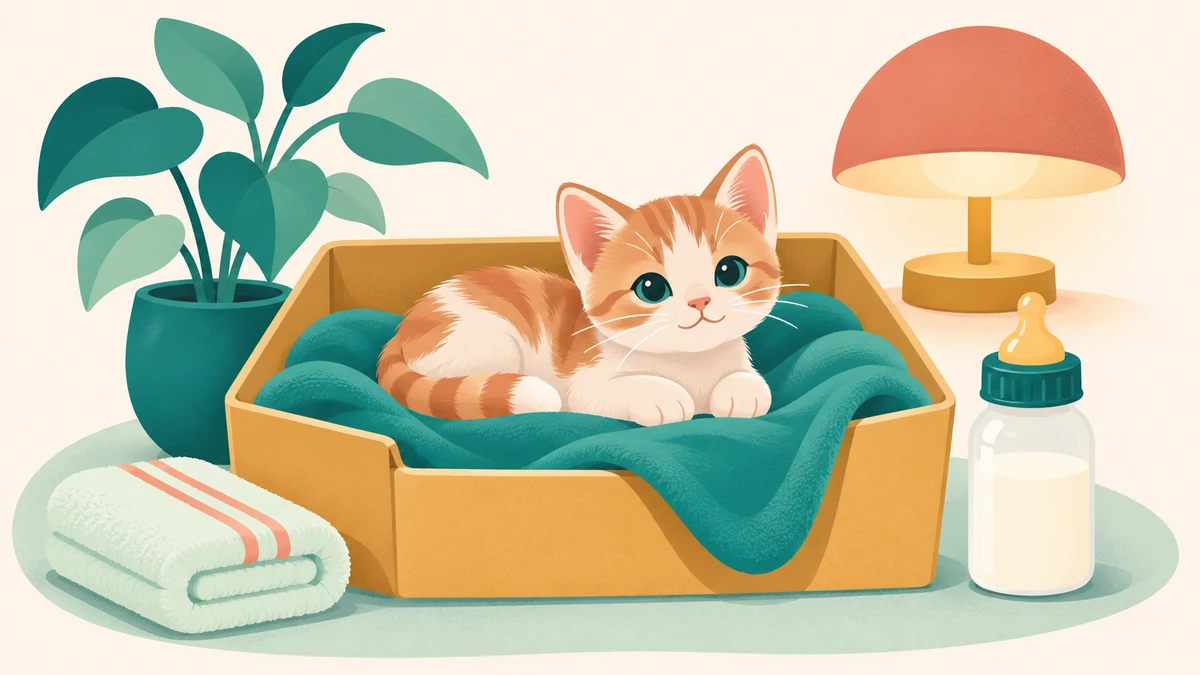
If you find a stray kitten, first make sure its mother is not nearby, because she may just be out hunting. If the kitten is cold, ill, injured, or in danger, contact a veterinarian or rescue promptly and move it to safety. Warm a cold kitten gradually before attempting to feed it. Use kitten milk replacer, never cow’s milk. Call a veterinarian or local animal shelter as soon as you can. Very young kittens need care around the clock.
Quick Summary
- If the kitten looks healthy and is in a safe place, watch from a distance for a few hours to see whether the mother returns.
- Warm a cold kitten before feeding it.
- Feed kitten milk replacer from a pet store, not cow’s milk.
- Estimate age to know how often to feed.
- Young kittens need help going to the bathroom.
- Get a vet checkup as soon as possible.
Step 1: Check for the Mother
Mother cats often leave kittens alone for a few hours to find food. Taking kittens away from a healthy mother is usually worse for them. If the kitten looks healthy and is safe, watch quietly from a distance for a few hours. Stay far enough away that the mother does not feel threatened.
Step in right away if the kitten is:
- In a road, a storm drain, or extreme heat or cold
- Injured, weak, or covered in fleas
- Crying nonstop for hours
- Near a mother cat that is clearly dead or gone
Step 2: Keep the Kitten Warm
Young kittens cannot control their body temperature well. A cold kitten is in serious danger. Before anything else:
- Wrap the kitten in a soft towel or fleece.
- Place it in a box with a heating pad set on low under half of the box, covered with a towel, so the kitten can move away if it gets too warm.
- A water bottle filled with warm (not hot) water, wrapped in a towel, also works.
Do not feed a cold kitten. Its body cannot digest food properly until it is warm. Warm it gradually first.
Step 3: Estimate the Kitten’s Age
Age affects feeding and care. A vet can estimate it, and these signs offer a rough guide:
- Under 1 week: eyes closed, ears folded flat, umbilical cord may be attached
- About 1 to 2 weeks: eyes beginning to open, usually blue, crawling clumsily
- About 3 to 4 weeks: ears standing, starting to walk, baby teeth coming in
- About 5 to 8 weeks: running, playing, can start eating wet kitten food
Step 4: Feed the Right Food
Never give cow’s milk. It can cause diarrhea, which is dangerous for kittens. Instead:
- Bottle-age kittens need kitten milk replacer (KMR), sold at pet stores and some grocery stores, fed with a kitten bottle. Ask a veterinarian or experienced rescue caregiver to demonstrate feeding before you try it.
- Older kittens (roughly 4 weeks and up) can start on wet kitten food mixed with formula, moving to plain wet food over time.
How to bottle-feed
- Warm the formula to about body temperature. Test a drop on your wrist.
- Place the kitten on its belly, the way it would nurse from its mom. Never feed a kitten on its back.
- Let it suckle at its own pace. Do not squeeze formula into its mouth.
- Burp gently by patting its back after feeding.
Newborns may need feeding every 2 to 3 hours, including overnight. Follow the directions on the formula package and your vet’s advice.
Step 5: Help With the Bathroom
Very young kittens cannot pee or poop on their own. Their mother licks them to stimulate it. After each feeding, gently rub the kitten’s bottom with a warm, damp cotton ball or soft cloth until it goes. Around 3 to 4 weeks, you can introduce a shallow litter box with non-clumping litter.
Step 6: Get to a Vet
A vet visit should happen as soon as possible. The vet can:
- Confirm age and health
- Check for fleas, worms, and infections
- Give a safe feeding plan
- Advise on vaccines and spay or neuter timing
Do not use dog flea products or human medications on a kitten. Some are toxic to cats.
Step 7: Keep It Clean and Safe
- Keep the kitten away from other pets until a vet checks it.
- Wash your hands before and after handling.
- Give it a quiet, warm, enclosed space away from drafts.
Step 8: Decide on the Long Term
Caring for a young kitten is a big commitment. If you cannot keep it, contact local shelters or rescue groups. Many have foster programs and can help. If you do keep it, our guide on how to introduce a new cat will help when it is time to meet other pets.
Warning Signs: Get Help Right Away
- Not eating or too weak to suckle
- Cold to the touch even after warming
- Diarrhea, vomiting, or trouble breathing
- Crusty eyes or nose, or lethargy
Young kittens can go downhill quickly. Call a vet or emergency clinic without waiting.
FAQ
Can I give a stray kitten milk?
Not cow’s milk. Use kitten milk replacer instead.
How do I know if a kitten is abandoned?
If the kitten is healthy and safe, watch from a distance for a few hours and contact a rescue if the mother does not return. A weak, cold, injured, or ill kitten needs help right away; do not wait.
How often should a young kitten eat?
Newborns may eat every 2 to 3 hours. Older kittens need fewer, larger meals. A vet can give an exact schedule.
When can a kitten use a litter box?
Many kittens start learning around 3 to 4 weeks of age.
Leave a Reply