
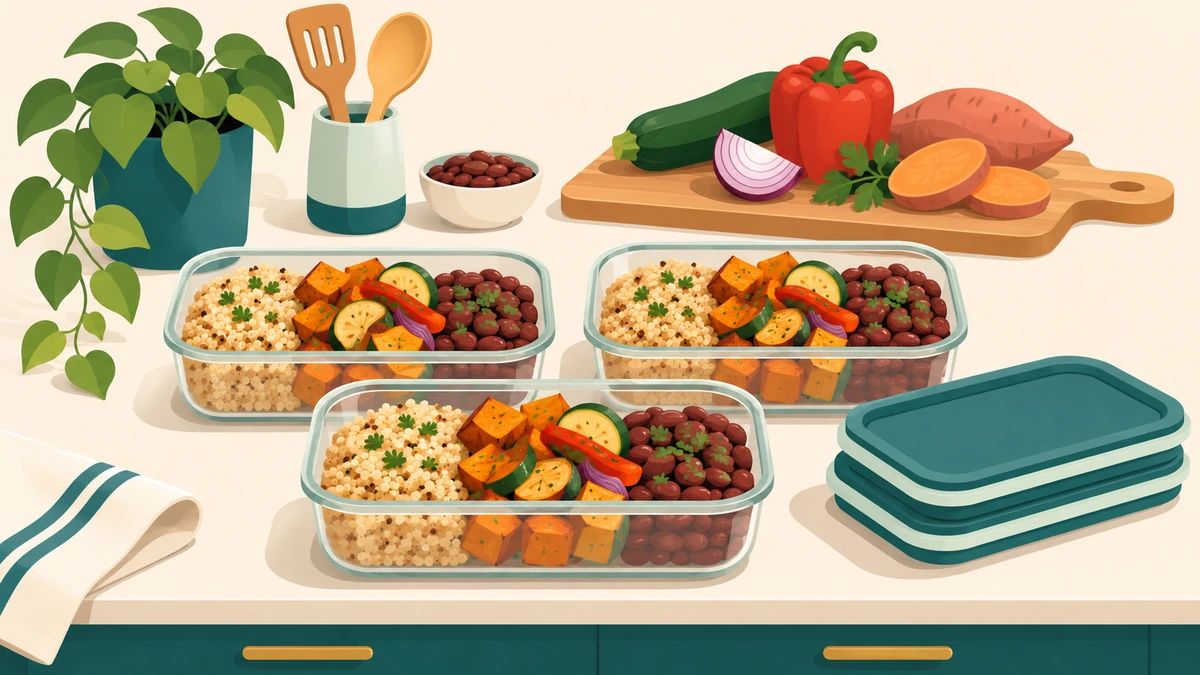
To meal prep for the week, choose a few simple recipes, make one grocery list, and spend one or two hours cooking in batches, usually on a weekend. Cook versatile staples like a protein, a grain, and roasted vegetables, then portion them into containers. Store food safely in the fridge and plan to eat most meals within three to four days, freezing the rest.
Quick Summary
- Start small: just lunches or just dinners.
- Pick 2 to 3 recipes that share ingredients.
- Shop once with a list.
- Batch cook proteins, grains, and vegetables.
- Use good containers and label them.
- Eat fridge meals within about 3 to 4 days. Freeze the rest.
Why Meal Prep Helps
Meal prep saves time on busy weeknights, cuts down on takeout, reduces food waste, and makes it easier to eat the way you want. It also removes the daily “what’s for dinner?” question.
Step 1: Decide What to Prep
Do not try to prep every meal on your first try. Choose one focus:
- Lunches for work or school
- Weeknight dinners
- Breakfasts you can grab and go
Once that becomes easy, add more.
Step 2: Choose Your Style
- Full meals: cook complete meals and portion them into containers. Easy to grab.
- Ingredient prep: cook components separately (chicken, rice, veggies) and mix them into different meals. Less boring.
- Prep only: wash and chop produce and make sauces to shorten cooking time on busy nights.
Many people find ingredient prep the most flexible.
Step 3: Pick Recipes That Share Ingredients
Choose two or three recipes that use overlapping ingredients. For example, a pack of chicken thighs, a bag of rice, and a few vegetables can become:
- Chicken and rice burrito bowls
- Chicken stir-fry with veggies
- Chicken salad wraps
Overlap means less shopping, less waste, and less cooking.
Step 4: Make a Grocery List
Check what you already have, then write a list organized by store section: produce, meat, dairy, pantry. Stick to it. Buying staples in bulk, like rice, oats, and frozen vegetables, saves money over time.
Step 5: Gather Containers
- Glass or BPA-free plastic containers with tight lids
- Divided containers to keep foods separate
- Small containers for sauces and dressings
- Freezer bags for soups and extras
- Masking tape and a marker for labels and dates
Step 6: Cook in Batches
Set aside one to two hours. Work in an order that keeps everything moving:
- Start grains first. Start rice, quinoa, or pasta and set timers so you can monitor them while preparing other ingredients.
- Roast vegetables. Toss chopped veggies with oil and seasoning and roast on sheet pans.
- Cook proteins. Bake chicken, brown ground meat, hard-boil eggs, or cook beans.
- Chop fresh items. Wash lettuce, slice peppers and cucumbers, portion fruit.
- Make a sauce or two. A simple dressing or sauce keeps meals interesting.
A well-seasoned cast iron skillet is great for searing meats in batches. Here is how to clean and care for one.
Step 7: Cool, Portion, and Store Safely
- Refrigerate perishable cooked food promptly, within two hours, or within one hour if the surroundings are above 90°F. Do not wait for it to cool to room temperature.
- Divide large batches into shallow containers so they cool faster.
- Label each container with the contents and date.
- Keep the refrigerator at 40°F or below and eat cooked leftovers within 3 to 4 days.
- Freeze portions you will eat later in the week or month.
- Reheat leftovers to 165°F throughout, checked with a food thermometer.
Step 8: Keep It From Getting Boring
- Use different sauces with the same base ingredients.
- Rotate recipes every week or two.
- Add fresh toppings at meal time: herbs, avocado, cheese, salsa, or pomegranate seeds. (Here is how to peel a pomegranate without the mess.)
- Keep a few freezer meals for nights you want something different.
Easy Meal Prep Ideas
- Breakfast: overnight oats, egg muffins, yogurt parfaits
- Lunch: grain bowls, wraps, pasta salad, soup
- Dinner: sheet-pan chicken and vegetables, chili, stir-fry, baked pasta
- Snacks: cut veggies with hummus, hard-boiled eggs, trail mix
Keep Pests Away
Prepping lots of produce? Store ripe fruit in the fridge and take out kitchen scraps promptly to avoid fruit flies. If they show up anyway, here is how to get rid of fruit flies.
FAQ
How long does meal prep last in the fridge?
A common guideline is about 3 to 4 days for cooked leftovers. Freeze anything you will not eat in that window.
What day should I meal prep?
Sunday is popular, but any day works. Some people prep twice a week for fresher meals.
Is meal prep cheaper?
It often is, because you buy only what you need and eat out less.
What foods do not meal prep well?
Fried foods, delicate greens with dressing already on them, and some cooked pastas can get soggy. Store sauces separately.
Leave a Reply