
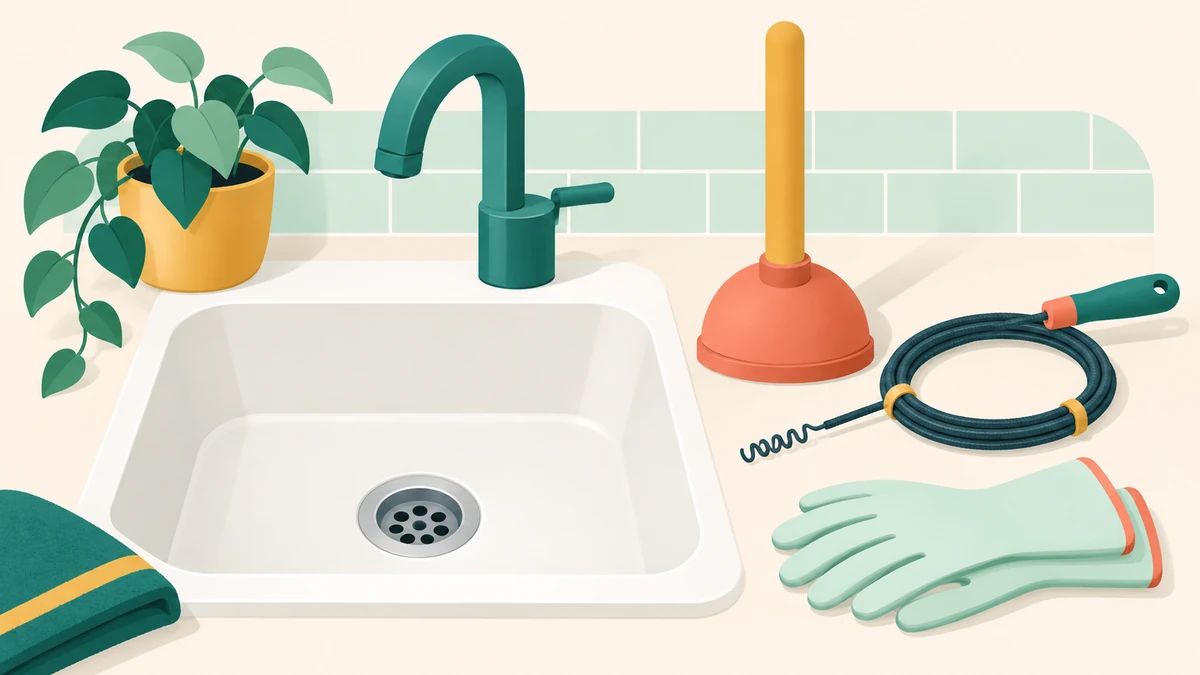
For minor sink or shower clogs, start by removing visible debris, using a sink plunger, or trying a plastic drain snake. Start with the gentlest method and work up. For kitchen sinks, cleaning the P-trap under the sink often solves stubborn clogs. If several drains are slow at once, call a plumber.
Quick Summary
- Start with hot water to melt grease and soap scum.
- Try baking soda followed by vinegar.
- Use a plunger made for sinks.
- Pull out hair clogs with a plastic drain snake.
- Clean the P-trap under kitchen and bathroom sinks.
- Call a plumber if multiple drains back up.
Why Avoid Chemical Drain Cleaners?
Harsh chemical cleaners can be dangerous to skin and eyes, can produce fumes, and may damage some pipes with repeated use. If they do not work, you are left with a sink full of caustic water, which makes other fixes risky. Use the methods below only if no chemical drain cleaner has been added. If cleaner is already in the drain, stop and tell a plumber what was used.
Method 1: Hot Water
Best for: slow drains from grease or soap buildup.
- Heat a kettle or pot of water.
- Pour it slowly down the drain in a few stages.
- Wait a minute between pours.
Important: if you have PVC plastic pipes, use hot tap water or water that is hot but not boiling, since boiling water may soften PVC joints. Do not pour boiling water into a porcelain sink that is full of standing water.
Method 2: Baking Soda and Vinegar
Best for: light buildup and odors.
- Remove as much standing water as you can.
- Pour about half a cup of baking soda into the drain.
- Follow with about a cup of white vinegar.
- Cover the drain with a stopper or rag to keep the fizz inside the pipe.
- Wait 15 to 30 minutes.
- Flush with hot water.
This works best for maintenance and minor clogs. It may not clear a solid blockage.
Method 3: Plunger
Best for: sinks, tubs, and showers with a solid clog.
- Use a flat-bottomed sink plunger, not a flanged toilet plunger.
- Fill the sink with a few inches of water so the plunger cup is covered.
- Block the overflow hole with a wet rag. For a double kitchen sink, plug the other drain.
- Place the plunger over the drain to make a seal.
- Pump up and down firmly 10 to 20 times, then pull up quickly.
- Repeat a few times if needed.
Method 4: Plastic Drain Snake
Best for: bathroom sinks and showers clogged with hair.
- Remove the drain stopper. Many lift out or unscrew.
- Push a plastic barbed drain snake (sold cheaply at hardware stores) into the drain.
- Pull it back slowly. Hair and gunk catch on the barbs.
- Repeat until it comes out clean, then flush with hot water.
Gloves are a good idea. It is not pretty.
Method 5: Clean the P-Trap
Best for: kitchen and bathroom sinks with stubborn clogs.
The P-trap is the curved pipe under your sink. It holds a water seal that helps keep sewer gases out; debris can also collect there.
- Put a bucket under the pipe and lay down towels.
- Loosen the slip nuts on both sides only if the trap has removable fittings. Do not force corroded fittings or cut glued pipe; call a plumber instead.
- Remove the trap and dump the contents into the bucket.
- Clean it with a brush and hot water.
- Reattach, making sure washers are in place, and tighten the nuts.
- Run water and check for leaks.
Method 6: Wet/Dry Vacuum
Best for: clogs close to the drain opening.
Use a wet/dry vacuum only if its manual permits liquid pickup and this use. Follow its filter and liquid-capacity instructions, and keep all exhaust and ventilation openings clear. Never use a household dry vacuum or vacuum liquid containing drain cleaner. If the manual does not cover the task, use a plunger or call a plumber.
How to Prevent Clogs
- Kitchen: never pour grease down the drain. Let it cool and throw it away. Scrape plates into the trash.
- Bathroom: use a hair catcher in showers and tubs.
- Monthly maintenance: flush drains with hot water, or use the baking soda and vinegar method.
- Garbage disposal: run plenty of cold water while using it and avoid fibrous foods like celery and potato peels in large amounts.
Clean drains also help prevent pests. If you have little flies hovering around the sink, see how to get rid of fruit flies. And keep your cast iron out of the soaking sink, too: here is how to clean a cast iron skillet the right way.
When to Call a Plumber
- Multiple drains are slow or backing up at the same time.
- Water backs up in a tub when you flush the toilet.
- You smell sewage.
- Nothing above works.
These can be signs of a problem in the main line that needs professional tools.
FAQ
Does baking soda and vinegar really unclog drains?
It can help with light buildup and odors, but it may not clear a solid blockage. A plunger or snake works better for that.
Can boiling water damage pipes?
It can affect PVC pipes and some fixtures. Use very hot, not boiling, water if you are unsure.
What is the fastest way to unclog a bathroom sink?
Remove the stopper and pull out hair with a plastic drain snake.
How do I unclog a kitchen sink with standing water?
Use a sink plunger first. If that fails, clean the P-trap.
Leave a Reply